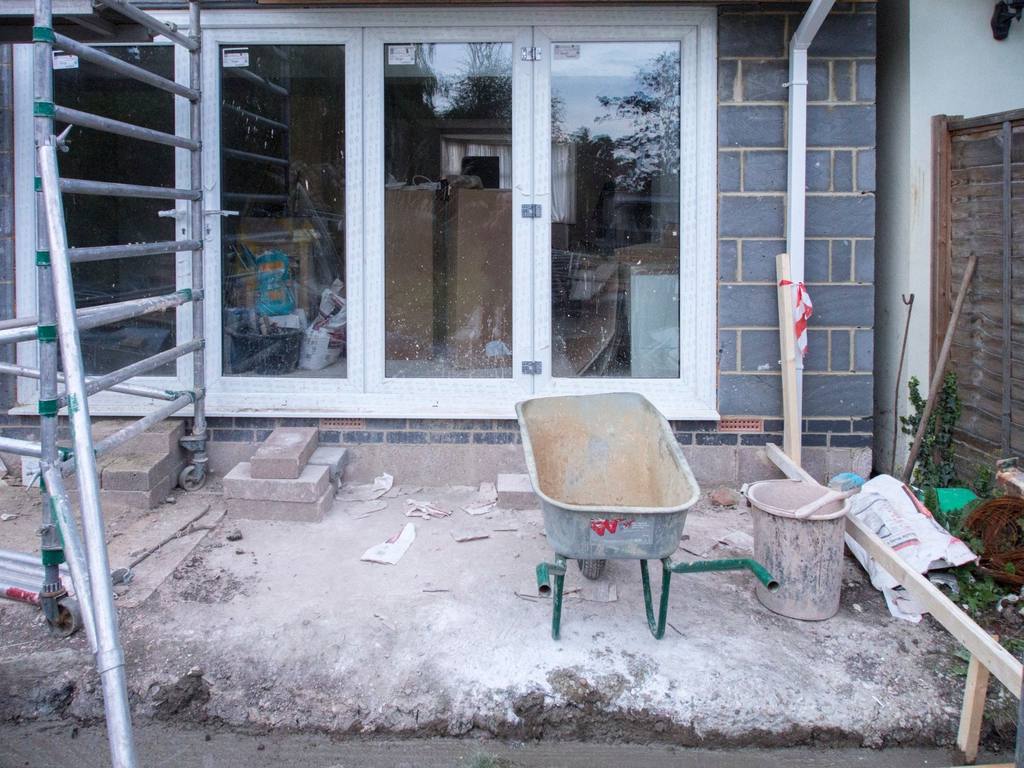
Photo by Brett Jordan on Pexels.
Even well-run building projects produce disagreements: a snagging list that never gets finished, a leaking flat roof on a new extension, a variation that appears on the final invoice, or a builder who disappears to another job with the kitchen half fitted. In London, where projects are often expensive and neighbours are close, the temptation is either to withhold everything and wait, or to rush straight to threats. Neither tends to work well. This guide sets out a calmer sequence that keeps your options open and your costs down. Sources were checked on 28 October 2026.
If your concern is that the firm itself is in financial trouble, read our separate guide on protecting your project if a building firm goes under; the steps below assume the business is still trading.
1. Know what the law already gives you
Most London homeowners commissioning work are consumers, and the Consumer Rights Act 2015 implies terms into the contract whether or not anything was written down. Section 49 requires a trader to perform a service with reasonable care and skill. Other sections cover information the trader gave you that you relied on, a reasonable price where none was agreed, and performance within a reasonable time where no date was fixed. Where the service falls short, the Act gives you the right to repeat performance - having the work put right - and, if that is impossible or is not done within a reasonable time and without significant inconvenience, a price reduction.
Citizens Advice's page on problems with building work and home improvements translates this into practical terms. You should take the problem up with the trader who arranged the work, even if they subcontracted it. If they will not fix it, you can ask for a partial or full refund, depending on how bad the problem is, and once a refund is agreed the law says you should receive it within 14 days.
Time matters, but not in the panicked way people fear. For a simple contract claim, the Limitation Act 1980 generally gives six years from the date of the breach. That is a backstop, not a target: evidence fades, builders move on and patience is rarely rewarded.
2. Build the file before you write a word
The person with the better file usually wins the argument long before any third party is involved. Before contacting the builder formally, gather:
- the quote or contract, specification and drawings, and any written variations - including WhatsApp messages and emails;
- every invoice and proof of payment, showing what has been paid and for which stage;
- dated photographs and short videos of the defects, ideally with a tape measure or spirit level visible where relevant;
- a simple timeline: start date, promised dates, when problems appeared, and each time you raised them;
- any building control or competent person scheme paperwork, and any warranty or insurance-backed guarantee documents.
Where the dispute is technical - cracking, damp, a roof that ponds - an independent report from a suitably qualified surveyor or engineer is often the single most persuasive document. It costs money, but it also tells you honestly whether your complaint is as strong as you think.
3. Complain in writing, and be specific
Citizens Advice publishes a free template letter to complain about poor quality work. Whatever wording you use, the letter should list each defect, explain what you want done (put right, or a sum off the price), set a reasonable deadline and ask for a written reply. Keep the tone businesslike; it may later be read by a mediator or a district judge.
Resist the urge to withhold far more than the disputed work is worth. Holding back a sum that reasonably reflects the defects is common; refusing to pay anything at all for substantially completed work can turn you into the party in breach.
4. Use the builder's scheme or trade body
If the builder belongs to a scheme, it may offer a cheaper route than court. TrustMark's complaints process, for instance, has three stages: raise the complaint with the registered business; escalate it to the business's scheme provider, which should investigate and mediate; then go to the Dispute Resolution Ombudsman. You can approach the ombudsman once you have had a final response you are unhappy with, or 12 weeks after your initial complaint, provided you escalate within 12 months of that complaint. TrustMark notes that the ombudsman cannot consider complaints against businesses that have ceased trading or entered administration or liquidation.
Check membership on the scheme's own website rather than a logo on the van or a line in the quote. If the builder is not a member of anything, skip this step.
One route that is not generally available to homeowners is statutory adjudication. Section 106 of the Housing Grants, Construction and Regeneration Act 1996 excludes construction contracts with a residential occupier from the Act's adjudication and payment provisions, unless the contract itself provides for them.
5. The letter before claim
If informal complaint fails, the courts expect you to follow the Practice Direction on Pre-Action Conduct. That usually means writing to the other side with concise details of the claim - the basis for it, a summary of the facts, what you want and how any sum is calculated - and allowing a reasonable time to respond: the Practice Direction suggests 14 days in a straightforward case and no more than three months in a very complex one. It also expects the parties to consider settlement and alternative dispute resolution. A party who ignores these steps can be penalised in costs or interest.
6. Mediation: free for smaller claims
Mediation is not a sign of weakness. GOV.UK's guidance on the small claims mediation service explains that if a claim of £10,000 or less is defended, you will be told you must attend mediation, which the court organises free of charge. It takes place by telephone, with the mediator speaking to each side separately, in an appointment lasting up to an hour. Any agreement reached is legally binding, and what is said cannot be mentioned later in court. If you are required to attend and do not, or make no real effort, the judge can impose sanctions, including striking out the claim or ordering you to pay costs.
For larger claims, the court may offer mediation, or you can arrange independent mediation yourselves at any stage.
7. If you do go to court: dated costs and tracks
Money claims of modest value are normally allocated to the small claims track. Under Civil Procedure Rules Part 26, that is the normal track for claims worth not more than £10,000, while the fast track is the normal track for most money claims up to £25,000. Legal costs you can recover from the other side are very limited on the small claims track, which is why many homeowners represent themselves.
The issue fee depends on the amount claimed. GOV.UK's court fees table (checked 28 October 2026) includes:
- up to £300: £35;
- £1,500.01 to £3,000: £115;
- £3,000.01 to £5,000: £205;
- £5,000.01 to £10,000: £455;
- £10,000.01 to £200,000: 5% of the claim.
Hearing fees are payable separately if the case goes to a hearing; they are set out in the HMCTS EX50 civil court fees leaflet, which also explains help with fees for people on low incomes. Fees change, so check both pages on the day you issue.
You can usually add interest to a claim for a fixed sum. GOV.UK's page on working out interest says that for debts other than late commercial payments the rate is usually 8% a year, calculated daily.
Before issuing, ask two practical questions. First, is the builder worth suing - is it a trading limited company with assets, or a sole trader you can actually find? A judgment you cannot enforce is an expensive certificate. Second, is your claim proportionate to the stress? Often a mediated reduction is worth more than a contested win.
A sensible sequence, in brief
- Stop paying for the disputed work, but keep paying for undisputed work as agreed.
- Assemble the file: contract, payments, photographs, timeline, reports.
- Write a specific complaint with a reasonable deadline.
- Use the builder's scheme or trade body if there is one.
- Send a letter before claim that complies with the Practice Direction.
- Mediate - compulsory and free for defended claims of £10,000 or less.
- Issue a claim only if the builder can pay and the claim is proportionate.
Prevention remains cheaper than any of this. Our homeowner's guide covers pricing against a defined scope, approving variations before they go ahead, and completing snagging and certification before the final payment - the habits that make disputes less likely in the first place.
Sources (checked 28 October 2026): Consumer Rights Act 2015, s49 and s55; Citizens Advice, Problem with building work; Citizens Advice, template letter; Limitation Act 1980, s5; TrustMark, Complaints process; Housing Grants, Construction and Regeneration Act 1996, s106; Practice Direction - Pre-Action Conduct and Protocols; GOV.UK, Small claims mediation service; CPR Part 26; GOV.UK, Court fees; HMCTS, EX50 civil and family court fees; GOV.UK, Work out interest. Information only; not legal advice.
Quick answers
What can I ask for if my builder did a poor job?
Under the Consumer Rights Act 2015 a trader must perform a service with reasonable care and skill. Citizens Advice explains that you can ask the trader to put the problem right within a reasonable time and without significant inconvenience, and if they cannot or will not, you can ask for a partial or full price reduction depending on how bad the problem is.
How much does it cost to take a builder to the small claims court?
GOV.UK's claim-fee table (checked 28 October 2026) runs from £35 for claims up to £300 to £455 for claims between £5,000.01 and £10,000, with a further hearing fee if the case goes to a hearing. The small claims track is normally for claims worth up to £10,000; in each case check the current fees on GOV.UK before issuing.
Is court mediation compulsory?
For defended claims of £10,000 or less, GOV.UK says you will be told you must attend the free HMCTS small claims mediation service, normally a telephone appointment of up to an hour. A judge can impose sanctions on a party who does not attend or make an effort to reach agreement.